
Winter can be tough on eBikes—but with the right preparation, you can enjoy smooth rides even in cold weather. Here at Surface 604, we make high-performance eBikes capable of carrying you through every season, so here’s our guide to getting yours ready to handle the snow and ice with ease.
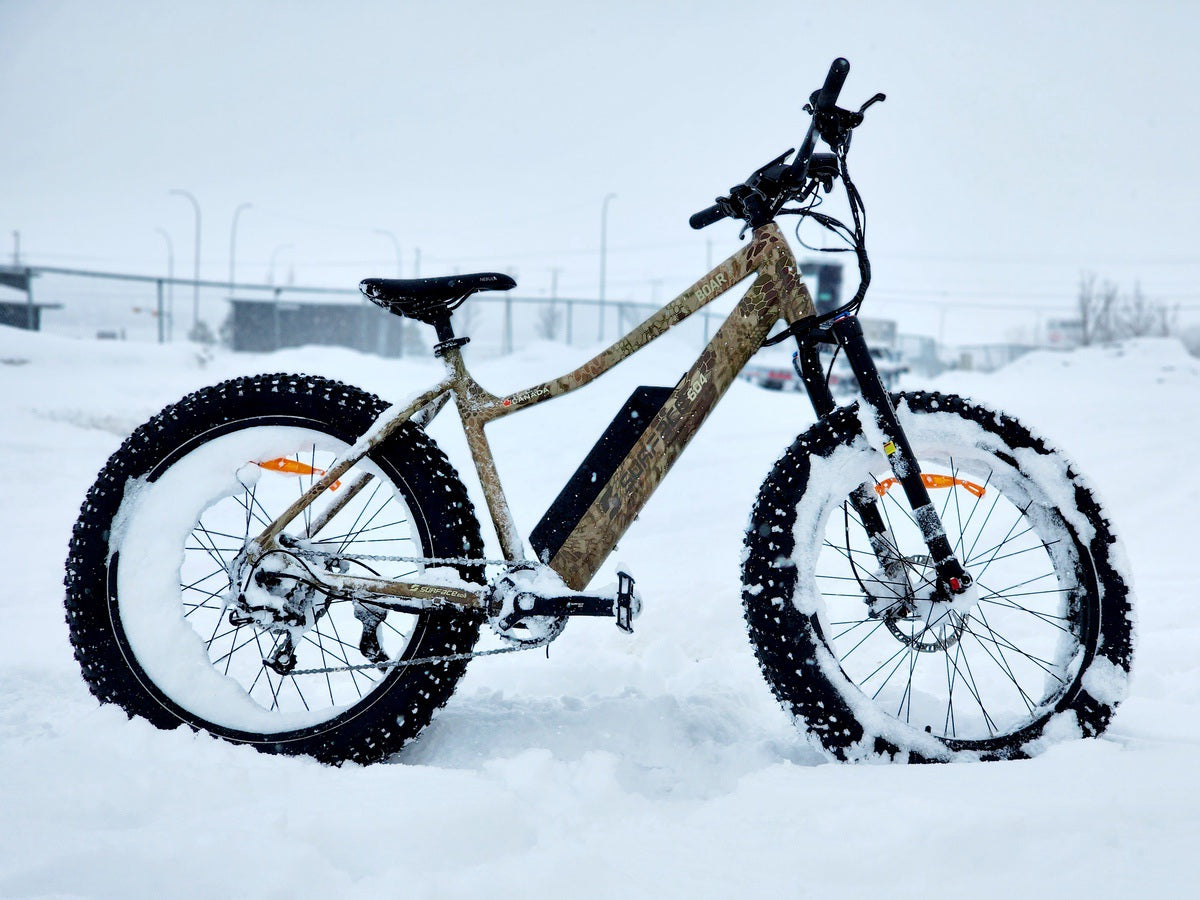
Riding your eBike in the winter can be exhilarating, but it isn’t exactly the same as going for a summer cruise. To maximize your comfort and safety, you’ll want to be familiar with the unique challenges winter can bring. These include:
Here’s a quick checklist of things you should pack for your winter rides:
Given the unique challenges of winter riding, it’s essential to make sure your ride is in great shape before the season begins. Either take your eBike to your nearest Surface 604 dealer for professional service, or give it a comprehensive check yourself that includes the following areas:
Below, we walk you through each of these areas and provide steps you can take to make sure they’re in good condition:
Since the cold is tough on batteries, you’ll want to do the following:
Moisture, salt, and cold temperatures can all affect your eBike’s motor, so here’s how to keep it in shape until the spring thaw:
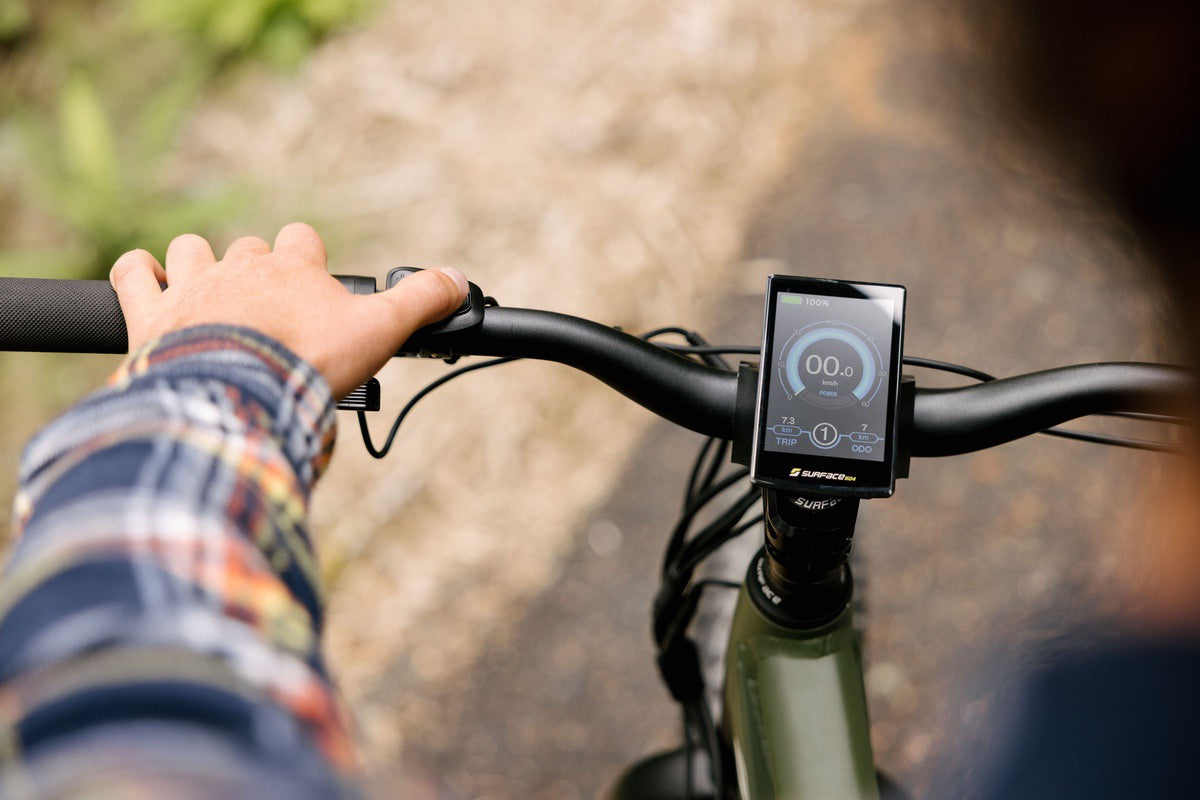
Winter has more moisture than other seasons due to the snow on the ground, so you’ll want to make sure your eBike’s electronics are protected. We don’t suggest tampering with any electronic equipment, but here are a few easy checks you can run to identify issues that might require professional attention.
Cold weather makes your brakes feel more stiff as the metal inside contracts, while road salt and dirt from melting snow can make your pads and rotors dirty. Here’s how to clean and inspect them:
Not every eBike is built to withstand wet weather and other winter conditions, so you’ll want to consult your owner’s manual and determine the IP rating. IP stands for ingress protection and is a metric that shows how well your bike resists the elements. Here’s how it works:
So what does that mean in a practical sense? Basically, a Surface 604 bike should be fine to cross streams and ride in the snow—but you probably don’t want to submerge the whole thing in water. It’s also a good idea to dry off your eBike after exposing any part of it to rain or snow so that you can help it last as long as possible without experiencing corrosion.
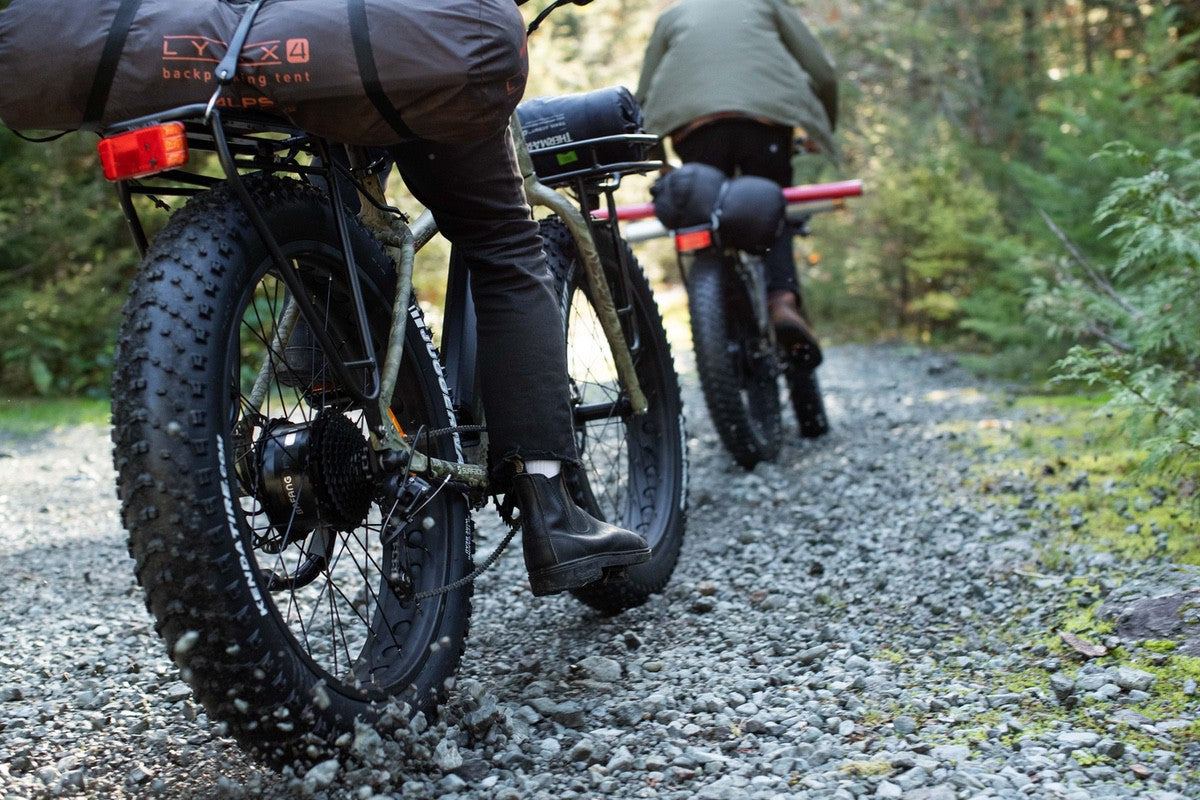
Finally, remember that winter conditions are slippery. Snow, ice, and slick road surfaces after the snow is melted or cleared can all reduce your eBike’s ability to grip riding surfaces if you aren’t careful.
Give your eBike better grip by taking these quick steps:
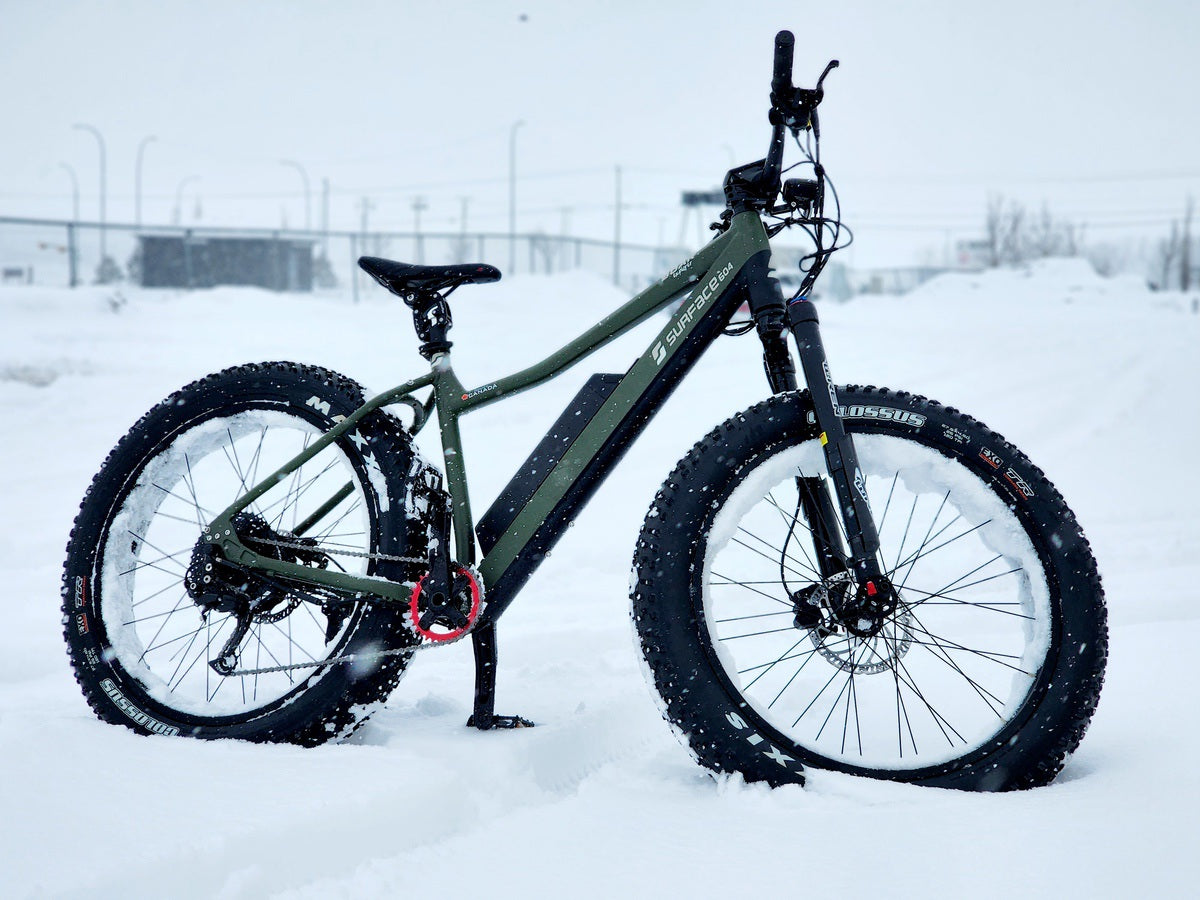
Finally, remember that not every eBike on the market is engineered with winter riding in mind. You can follow all of the advice above, but if your ride wasn’t designed to traverse snow or ice, you could still find yourself facing unnecessarily challenging—and potentially unsafe—conditions.
Surface 604 makes numerous models you can ride in cold conditions, but our fat-tire eBikes are among the best for keeping you stable and safe in winter weather. Here are two we recommend if you’re planning to ride year-round.
Price: $2,663 USD
Engineered with 4.5” Kenda Juggernaut fat tires that you can deflate down to 5 PSI for improved traction on tough terrain, the Boar Hunter also sports a high-torque, fat-bike-specific Bafang hub motor that peaks at 750W. Front and rear luggage racks are included for good measure, making this your ideal hunting or fishing companion—any time of year.
Price: $2,591 USD
A lighter and more streamlined fat-tire eBike, the Explorer uses 4.5” Maxxis Colossus tires and has 180mm Tektro hydraulic disc brakes that provide awesome stopping power, even on the slipperiest surfaces. A rear luggage rack and Büchel Shiny 120 LED headlight also ensure that you can carry extra winter emergency gear and maintain visibility in low-light conditions.
A slight reduction won’t significantly increase risk—but you should avoid severely depleting the air in your tires unless you have a fat-tire eBike meant to accommodate low PSI.
Use leather conditioner to keep it supple. For cushioned saddles, make sure to keep them dry and ice-free when storing your bike between rides.
Even with regular personal maintenance, it's a good idea to get your eBike professionally serviced at least once during the winter season, especially if you're frequently riding in challenging conditions. A mid-winter check by a professional can identify potential issues you can’t detect on your own and help you continue riding safely.
Yes—winter-specific lubricants are recommended for cold and wet conditions. Standard lubricants might not offer the same protection in freezing temperatures and could become too thick or even freeze. Winter lubricants are designed to repel water, resist salt, and stay fluid in low temperatures, helping your chain and components operate smoothly.

Discover the ideal winter eBike with Surface 604. Robust, all-terrain designs perfect for cold weather. Explore our range for safe, comfortable winter rides!

Choosing between hub drive vs. mid-drive motors depends on your riding style, maintenance habits, budget, and more. Learn the difference here!

Cadence sensors apply power based on pedaling speed, while torque sensors engage the motor based on how hard you work. Which kind is best for your eBike?
Related Bikes
Related Articles
Stay in the Ride
eBike tips, new models, and rider stories.


